UHI researchers secure major UKRI funding to tackle pharmaceutical pollution from rivers to oceans
Researchers from across the University of the Highlands and Islands (UHI) partnership have secured two major UK Research and Innovation (UKRI) awards totalling £2.4 million; to investigate how pharmaceutical pollution is affecting freshwater and marine environments – and what this could mean for environmental and human health.
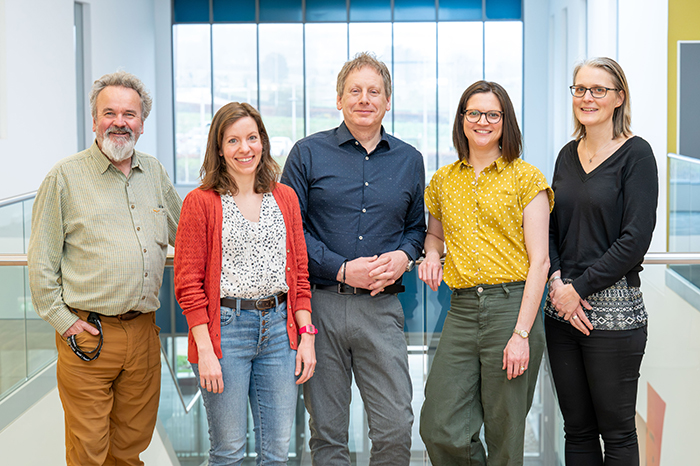
The projects bring together experts in environmental science, oceanography, ecology, public health, social science and healthcare to address the growing global challenge of contaminants in aquatic ecosystems using a ‘One Health’ approach, recognising the interconnectedness of human, animal and environmental health.
One project, led by researchers at UHI’s Environmental Research Institute (ERI) based at UHI North, West and Hebrides in Thurso, has secured £1.19 million to develop new approaches to reducing the environmental impact of medicines in Scotland. A second project, led by scientists at the Scottish Association for Marine Science (SAMS) in Oban, will investigate for the first time how marine pollutants, including pharmaceuticals and 'forever chemicals' move through ocean food webs and may ultimately reach people through seafood consumption.
Together, the projects position UHI and its partners at the forefront of research into pharmaceutical pollution and aquatic ecosystem health.
Tackling pharmaceutical pollution in Scotland’s waters
The £1.19 million PhRESHWater project (Pharmaceuticals Reduction in the Environment through Sustainable Healthcare) brings together researchers from UHI, the James Hutton Institute, NHS Highland, the University of Nottingham, Heriot-Watt University and the University of St Andrews.
The project will co-develop a systems-based approach to reducing the environmental impacts of medicines, using Scotland as a national pilot. It also involves collaboration with Scottish Water, the Scottish Environment Protection Agency (SEPA), and Uppsala University in Sweden.
Pharmaceutical pollution in rivers, lochs and coastal waters is an internationally recognised environmental and public health challenge. Medicines including antibiotics, anti-inflammatories and antidepressants have been detected in Scottish waters, where they may affect aquatic ecosystems and contribute to antimicrobial resistance.
Researchers will investigate pollution across the entire pharmaceutical lifecycle – from prescribing and patient use through to disposal and wastewater treatment. The project will develop pollution risk modelling, behaviour-change interventions to support sustainable prescribing and medicine disposal, innovative pollution-reduction technologies, and tools to support coordinated action across healthcare, environmental and water sectors.
The research builds on work already underway through the Scottish One Health Breakthrough Partnership, which brings together researchers, public agencies and policymakers to address pharmaceutical pollution in Scotland.
Professor Stuart Gibb, principal investigator for PhRESHWater, said:
“Pharmaceutical pollution is a complex challenge that cuts across healthcare, environmental protection and water management. By bringing together expertise from multiple disciplines and sectors, we can develop practical solutions that help protect both ecosystem and human health while supporting more sustainable healthcare systems.”
Investigating pollutants in the marine food web
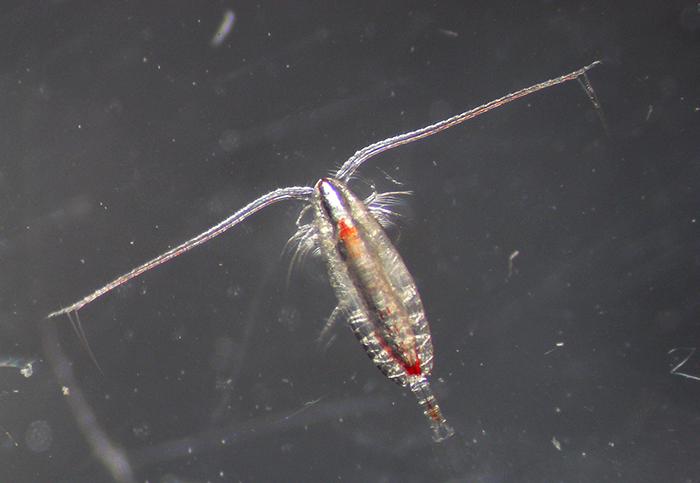
In parallel, a separate project funded in the same UKRI call is being led by Dr Laura Hobbs at SAMS. The £1.2 million PharmaCal project (Calanus as vectors of pharmaceuticals and contaminants in the marine environment) will investigate how ocean contaminants are transported through marine food webs by Calanus copepods – tiny but abundant marine organisms that play a crucial role in sustaining fish, whales and seabirds.
The two-year PharmaCal project will examine whether these lipid-rich copepods accumulate contaminants including pharmaceuticals, PFAS ‘forever chemicals’, and heavy metals, potentially concentrating pollutants within marine food chains.
Despite the importance of Calanus in supporting fisheries, aquaculture and food security, their role in contaminant uptake and transport is poorly understood, particularly when considering their potential impact on human health.
Dr Laura Hobbs, principal investigator for PharmaCal said:
“Contaminants released into the water can accumulate in plankton, be transported via ocean currents and animal migrations, magnify up the marine food chain, and eventually re-enter the human diet through seafood such as fish and shellfish.
“There is often an assumption that contaminants are less significant in the marine environment because the ocean is so vast and dilute. But if contaminants are being heavily absorbed or ingested by organisms such as Calanus near shore, they may become concentrated within marine food webs.”
PharmaCal brings together expertise in oceanography, ecology, ecotoxicology, social science and health, involving researchers from SAMS, NHS Highland, the University of Leeds, the University of Strathclyde and UHI’s Environmental Research Institute.
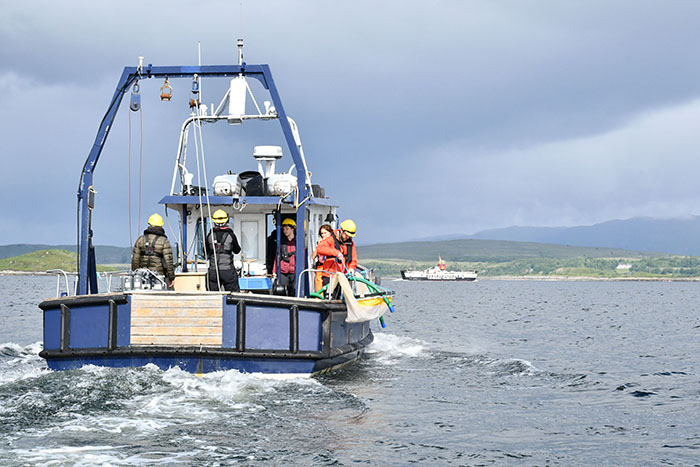
Researchers will sample waters around Scotland to understand how contaminants move through marine ecosystems and what implications this may have for seafood supply chains, fishing communities and human health.
International leadership in One Health research
Together, the projects reinforce Scotland’s growing reputation as a leader in integrated One Health research addressing environmental pollution and sustainability challenges.
By combining expertise across freshwater and marine environments, healthcare systems and environmental science, UHI researchers and their colleagues will generate new evidence, technologies and policy tools that support healthier ecosystems, more sustainable healthcare, and improved protection of public health.
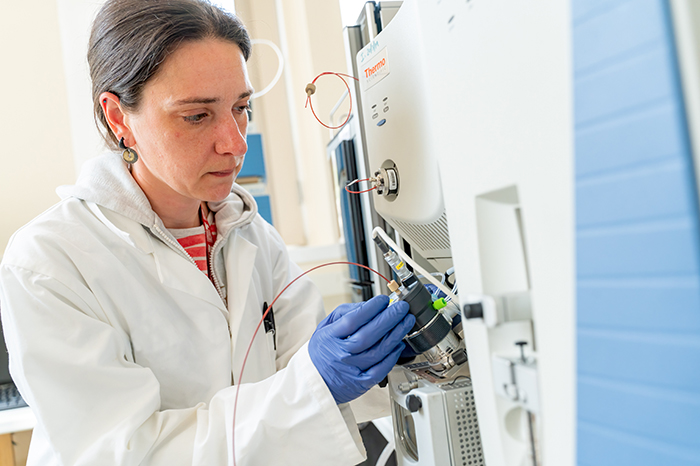
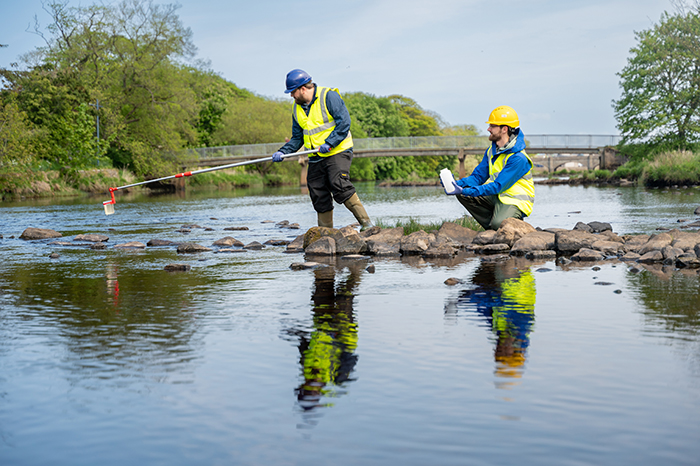
A Calanus copepod; a few millimetres long but highly abundant and central to marine ecosystems. The visible lipid sac in the centre of the body is a likely store of a wide range of contaminants. Photo credit: Nele Thomsen and SAMS.Maider Guiu in the laboratory at UHI Environmental Research Institute in Thurso. Photo credit: Tim Winterburn and UHI.Professor Alistair Kean, Dr Lydia Niemi, Professor Stuart Gibb, Dr Laura Hobbs and Dr Helena Reinardy at the Life Sciences Innovation Centre in Inverness. Photo credit: Tim Winterburn and UHI.Thomas Thompson and Michael Sinclair from UHI Environmental Research Institute water sampling in Caithness. Photo credit: Tim Winterburn and UHI.