Sustainability and Rural Regeneration MSc
 Course code: 93N2
 Study mode: You study most days of the week and complete all course units /modules in the standard time., You take fewer course units/modules per week compared to full time., You take one or more course unit/module(s) at a time.
 Course type: MSc
 International: Available to study online
 Study at: North, West and Hebrides
 Start in: January; September
 Learning mode: You access classes and/or materials digitally.
 Duration: Full time: 2 years; Part time: 3-6 years; Part time modular: 15 weeks
 How: You complete course tasks independently. These may be set by your lecturer or chosen by you.
What is special about this course?
Are you passionate about achieving sustainability in rural regions? Do you want to learn the theory, policy, and practice of sustainable regeneration to more fully understand how you can make a real difference? Whether you’re already working in this field or want to explore your growing interest in the future of rural areas, this unique online course is ideal for your needs.
In the words of one of our recent graduates, Sean Meehan: “I struggled to name what it was that I wanted to study…I was aiming to explore areas that I had found to overlap in the real world but are often studied in isolation: tourism, conservation, sustainable agriculture, resilient communities, culture…then I stumbled across the module list of the MSc Sustainability and Rural Regeneration, and it hit all the points I was looking for. The course is well structured, with a cohesive central message; it allows lots of freedom to pursue your own interests.”
Collaborate with those driving real world solutions as you learn about social, economic, and environmental theories and issues in the rural context, as well as developing key research and policy analysis skills in the interdisciplinary field of sustainability.
Explore vital sustainability skills such as how to work well with communities, understand geographic information system (GIS) mapping, and undertake environmental impact assessments, as well as topics such as extreme weather, economics of community wealth building, greenhouse gas auditing, and carbon footprinting.
Forge your own path in the drive to net zero in remote and rural regions and let us prepare you for a successful career in this essential field.
Special features
- Gain key theoretical knowledge in understanding current rural development and sustainability issues and how this may be applied to work effectively with communities and associated organisations
- Develop key research and policy skills to enable you to progress your career to become an expert in rural sustainability issues
- Study individual modules for personal or professional development, or work towards the PgCert, PgDip or full masters degree
- Opportunity to specialise in working with Gaelic communities and exit after three modules with the pathway PgCert Sustainability and Regeneration: Gaelic Communities
- Study online, full time or part time when and where it suits you, within the UK and internationally
Partnerships and accreditations
UHI are proud to provide this course to students at our partner organisation, the University of Akureyri in Iceland.
- Honours degree or ordinary degree in a relevant subject
- Postgraduate diploma or professional qualification in a relevant subject
- Other qualifications will be considered if accompanied by a minimum of three years' relevant professional experience
Postgraduate Loans (SAAS) (Scottish domiciled students)
Loans for tuition fees are available from SAAS for eligible Scotland domiciled students, and loans for living costs for eligible Scottish students.
(see fees/funding tab for more information)
Access routes
Direct progression from our own degrees:
- BSc (Hons) Environmental Science
- BA (Hons) Business and Management
- BA (Hons) Social Sciences
- BA (Hons) Sustainable Development
- BA (Hons) Geography
- BSc (Hons) Geography
UHI are proud to provide this course to students at our partner organisation, the University of Akureyri in Iceland.
Core modules for PG Cert Sustainability and Rural Regeneration are:
- Communities, nature and sustainability (S1)
- The economics of community wealth building (S2)
- Working with communities (S1/S2)
Core modules for PG Cert Sustainability and Regeneration: Gaelic Communities are:
- Revitalising Gaelic: strategies for community empowerment and language confidence (S1/S2)
- The economics of community wealth building (S2)
- Working with communities (S1/S2)
Option modules, from which you will choose three, may include the following (subject to availability):
- Agroecology: regenerative food systems (S2)
- Biodiversity management (S2)
- Environmental impact assessment (S1)
- Extreme weather (S2)
- Geographic information systems (S2)
- Global mountain geographies (S1)
- Measuring greenhouse gas emissions & carbon footprinting (S2)
- Net zero society (S2)
- Qualitative inquiry (S2)
- Quantitative research and data analysis (S1)
- Revitalising Gaelic: strategies for community empowerment and language confidence (S1/S2)
- Sustainable deer management (S2)
- Sustainable land use (S1)
- Understanding sustainability discourses (S2)
- Understanding the policy environment (S1)
- Water resources in a changing climate (S1)
- An elective may also be taken from any of the university's masters programmes, e.g. other research skills, or modules such as Qualitative inquiry or Quantitative research and data management
To achieve the award of MSc Sustainability and Rural Regeneration you must complete a research dissertation.
How will I study my course?
- Full-time
- Part-time
- Part-time modular (standalone modules)
- This course is mainly delivered online with scheduled sessions and tutorials
- Sessions are recorded and can be accessed online at any point from anywhere in the world after the scheduled class
- Online study will be done via the university's virtual learning environment (VLE), with support from your tutors
- You may have the opportunity to undertake an optional weekend residential in May/June with the Sustainable Development Society
- A fully online induction web resource is also available to all new students and you are encouraged to refer to this during your first term in particular
How long will my course last?
- Full-time: 2 years @ 30-36 hours per week (6 taught modules followed by MSc research project)
- Part-time: 3-6 years @ 10-24 hours per week (10-12 hours per week per module, dependent on study mode/module selection)*
- Part-time modular: 15 weeks @ 10-12 hours per week (per module)
Number of hours per week indicates the total number of hours you should dedicate to the course. This includes time online to view weekly lectures and other online materials, to participate in module discussion boards, and your own time spent on individual study and research.
*Study mode examples as below – hours per week are dependent on how many modules you choose to study per semester:
- 3 years @ 3 modules per academic year followed by MSc research project
- 4 years @ 2 modules per academic year followed by MSc research project
- 5–6 years @ 1 module per academic year followed by MSc research project - please note: this option should only be taken if you are self/employer-funded. See Fees/Funding tab for more information on funding limitations
- North, West and Hebrides
- This fully online course can be studied from anywhere in the world. You will be enrolled and supported by staff at UHI North, West and Hebrides
- University of Akureyri students: please click on the relevant apply link below (September or January start) and then select the 'University of Akureyri applicants' option to begin your application process
Start date
- September
- January
Fees
For students normally domiciled in Scotland, with a term-time address in Scotland, the following fees apply:
This includes
- EU nationals with settled or pre-settled status in the UK,
- EEA/Swiss nationals with settled status in the UK
- EEA/Swiss nationals with pre-settled status who are self-employed or migrant workers in the UK.
| Study Mode | 2025-26 | 2026-27 |
|---|---|---|
| Per module (20 credits) | £610 | £647 |
| Postgraduate certificate (3 modules, 60 credits) | £1,830 | £1,941 |
| Postgraduate diploma (6 modules, 120 credits) | £3,660 | £3,882 |
| Masters degree (6 modules + dissertation) | £5,490 | £5,820 |
For students normally domiciled in the rest of the UK (England, Wales and N. Ireland) or assessed as rest of the UK for fee status, the following fees apply:
| Study Mode | 2025-26 | 2026-27 |
|---|---|---|
| Per module (20 credits) | £840 | £890 |
| Postgraduate certificate (3 modules, 60 credits) | £2,520 | £2,670 |
| Postgraduate diploma (6 modules, 120 credits) | £5,040 | £5,340 |
| Masters degree (6 modules + dissertation, 180 credits) | £7,560 | £8,010 |
Following the UK’s departure from the European Union, the Scottish Government confirmed that EU/EEA and Swiss nationals, who do not have settled or pre-settled status, will be considered as international for fee purposes. These students will get an automatic fee scholarship.
This includes EEA/Swiss nationals with pre-settled status who are not self-employed or migrant workers in the UK.
| Study Mode | 2025-26 | 2026-27 | With scholarship |
|---|---|---|---|
| Per module (20 credits) | £1,200 | £1,273 | £956 |
| Postgraduate certificate (3 modules, 60 credits) | £3,600 | £3,819 | £2,868 |
| Postgraduate diploma (6 modules, 120 credits, 180 credits) | £7,200 | £7,638 | £5,736 |
| Masters degree (6 modules + dissertation, 180 credits) | £10,800 | £11,450 | £8,588 |
For students who do not normally reside in the UK or European Union, studying online from their home country, or assessed as international for fee status, the following fees apply:
| Study Mode | 2025-26 | 2026-27 |
|---|---|---|
| Per module (20 credits) | £1,200 | £1,273 |
| Postgraduate certificate (3 modules, 60 credits) | £3,600 | £3,819 |
| Postgraduate diploma (6 modules, 120 credits, 180 credits) | £7,200 | £7,638 |
| Masters degree (6 modules + dissertation, 180 credits) | £10,800 | £11,450 |
This course is not available to international students requiring Student Route visa sponsorship to study in the UK.
Funding
Eligible Scotland-domiciled students studying full-time can access loans up to £11,500 from the Student Awards Agency for Scotland (SAAS). This comprises a tuition fee loan up to £7,000 and a non-income assessed living cost loan of £4,500.
Eligible Scotland-domiciled students studying part-time can apply for a tuition fee loan from SAAS. You must be intending to complete the course in no longer than twice the length of time it would take for a full-time student. For example, if your course is available to full-time students as a one-year programme, you will be funded for a maximum of two years' part-time study. If your course does not have a full-time option, you must complete within three years. You can apply for a tuition fee loan up to £7,000, which will be paid pro-rata for each academic year of study.
Full details can be found on the SAAS website. Applications for loans open in April.
Students from the rest of the UK who meet the eligibility requirements may be able to apply for a loan from the Student Loan Company.
What can I do on completion of my course?
On successful completion of the course, you will be equipped to take up management positions, both at home and abroad, in:
- The public sector (e.g. local authorities, public utilities etc)
- National and regional development agencies
- Non-governmental development organisations
- International development agencies
- Gaelic development roles
- Community trusts and community development organisations
- National and regional conservation agencies
- Economic development consultants
- Environmental consultants
- Conservation trusts and charities
- Tourism heritage attractions
- National parks and countryside parks
- Secondary school teaching on completion of a PGDE
- Research and development to MRes and PhD studies
Can I progress into further study?
You may wish to progress from this MSc Sustainability and Rural Regeneration to pursue a PhD or further MRes studies.
Course is online and open to applicants to study online from overseas. It is not eligible for a Student Route Visa.
Please see guidance for international applicants regarding entry requirements
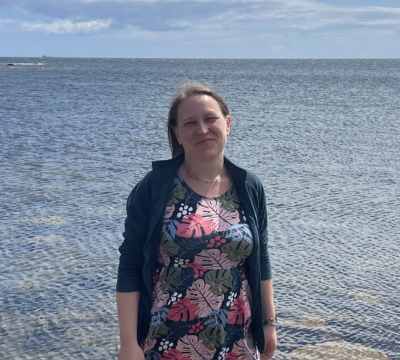
I wanted to open the door to working in community development and this course brought together two of my passions: communities and the natural world. The course content is on the pulse of current research and policy, I have gained a deep understanding of how key rural land-use is to tackle the twin emergencies of climate change and biodiversity loss, while sustaining thriving local communities.
The flexible format has made it possible to fit in studying, and on the discussion boards you can reflect on the content with fellow students, expanding learning and providing opportunity to test your understanding of the topics. It really is an exceptional opportunity. This course has given me the confidence to realise that I can make significant contribution to community development, it has widened my horizons, and given me a clearer national and global context for my work. I would highly recommend it.
Beth studied the MSc Sustainability and Rural Regeneration at UHI North, West and Hebrides.
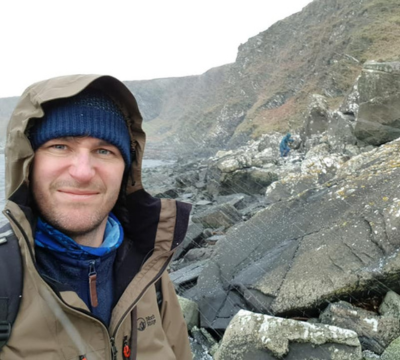
I chose this course as I thought the content was broad, but with the flexibility to cover a lot of bases. Some modules crossed over with other subjects, offering a diverse range of perspectives and conversations between students. There was a lot of complementary crossover between my studies and my work, providing me with knowledge and information useful to my work, while helping to ground my studies in the real-world practicalities.
The flexibility of online learning allowed me to tailor my study schedule to suit my needs. The tutors were helpful throughout and very supportive for a diverse range of learning styles and schedules.
Neil studied the MSc Sustainability and Rural Regeneration at UHI North, West and Hebrides.
I am passionate about helping rural and island communities thrive through the transition to a more sustainable future; it's a pleasure to work with like-minded colleagues and students on this course, developing knowledge and skills, sharing ideas, and helping unlock the potential of our land, people, and resources.
Dr Eilidh MacPhail, Associate Professor of Sustainable Rural and Island Development is the Programme Leader for the MSc Sustainability and Rural Regeneration.
Apply for Sustainability and Rural Regeneration MSc
We are delighted that you are thinking about studying at the University of the Highlands and Islands. We operate a fair and open admissions system committed to equality of opportunity and non-discrimination. We consider all applications on merit and on the basis of ability to achieve, without discrimination on grounds of gender, age, disability, ethnicity and socio-economic background. We welcome applications from all prospective students and aim to provide appropriate and efficient services to students with disabilities.